Cloudy pool water
Work through the checks for water that has lost its clarity.
Read the cloudy water guide
Pool
Find help with cloudy water, filters, testing, and heating. Estimate your pool’s volume and choose the next step.
Practical starting points for clearer water and everyday care.
Work through the checks for water that has lost its clarity.
Read the cloudy water guideCompare filter types and replacement considerations.
Explore pool filtersWater and equipment
Choose a measured treatment path or prepare a pump replacement.
Separate algae, metals and uncertain readings.
Read guidePlan a correction from test results, gallons and the product label.
Read guideCompare ingredients, water conditions and application instructions.
Read guideCheck flow, equipment and installation fit.
Read guidePool heating
Compare heating approaches, then use the heat pump guide and sizing inputs to prepare your next decision.
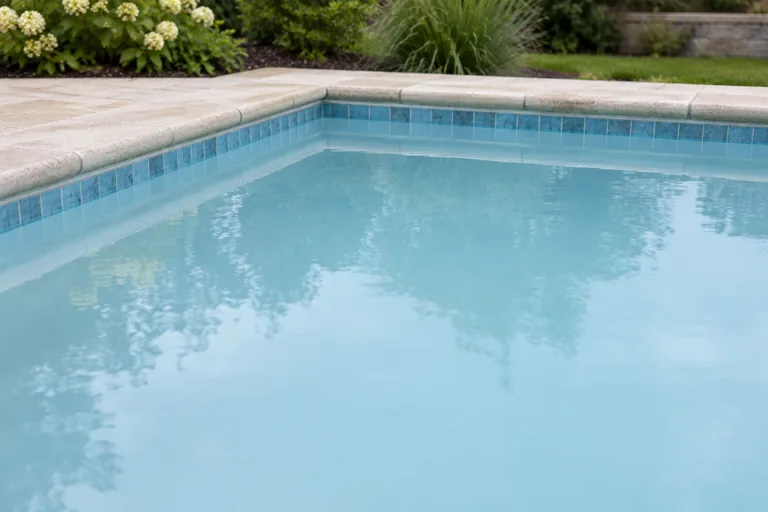
Check water visibility and your current water-test results. If the water is unusually cloudy or the bottom is obscured, keep swimmers out while you investigate.
Keep a short log of readings, products added, and equipment changes. A trend is more useful than trying to remember whether the water looked better yesterday.
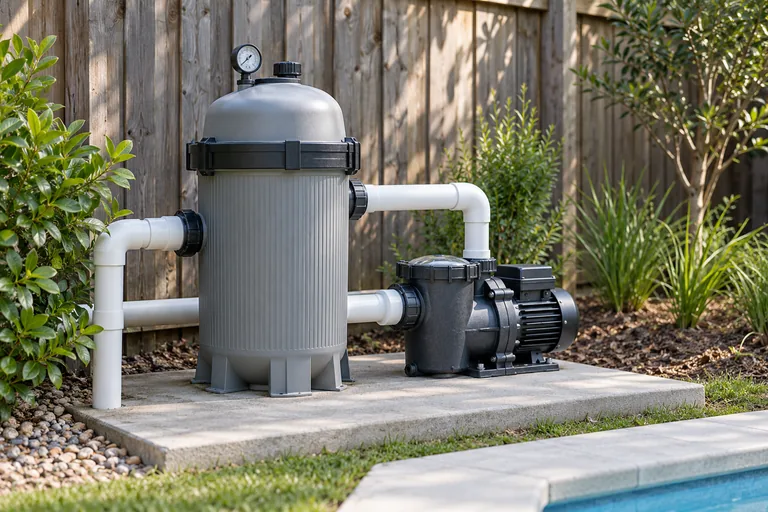
Know the pump and filter model, normal valve positions, and the filter’s clean pressure at the usual pump speed. Record these after normal service, when the system is working properly.
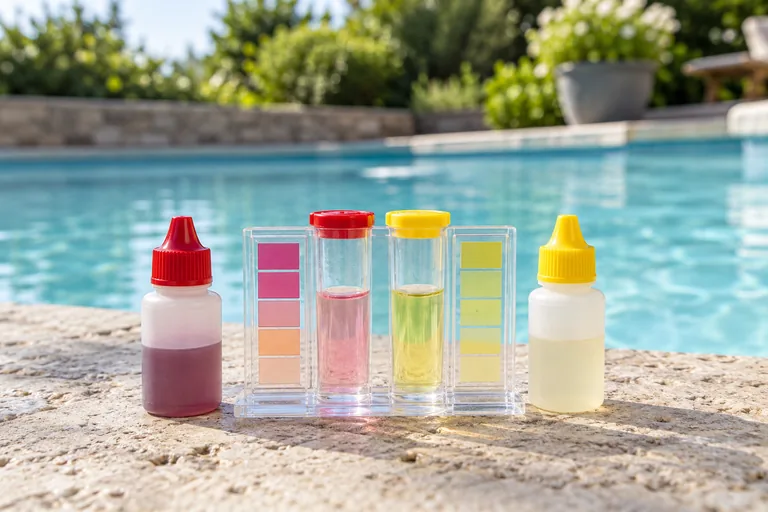
Separate the job from the shopping list. A test kit supplies measurements; a filter removes particles; a sanitizer controls germs. One does not automatically replace another.
Write down the exact test values, units, and time of sampling. Keep the product label rather than relying on a name such as “shock” or “clarifier.” Products sold for the same purpose can have different ingredients, concentrations, and application instructions.
Use pool volume as an input, not a substitute for testing. An old builder’s figure, an estimate to the top of the wall, and the volume at the actual waterline can differ. The volume calculator explains when a simple geometric estimate is appropriate.
Do not combine pool chemicals or use one product’s scoop for another. Follow the label’s handling, application, circulation, and re-entry instructions. If a reading conflicts with recent treatment, verify the test before adding more.
A dirty filter, a clogged flow path, and a failing pump can all affect circulation, but they do not call for the same purchase. Start with the filter label and observations that can be made without opening the pressure vessel.
A replacement cartridge needs a documented part match. A new pump needs the system’s flow and resistance requirements. Pool gallons alone cannot determine pump horsepower, filter compatibility, or heater capacity.
Date, time, free chlorine, pH, and other readings from your kit. Include rain, heavy use, or recent refill.
Product name, active ingredient, amount, and time added. Save the label.
Pump speed, pressure, clean baseline, and what changed after service.
Whether clarity, readings, or circulation improved. Avoid changing several products at once and losing track of what helped.
No. Visibility and water chemistry are separate checks. Use current test results and the product instructions, as well as checking that the bottom is visible.
These pages cover residential swimming pools. Hot tubs, spas, and public pools have different operating requirements.
Obtain the equipment manuals, documented water volume, and the pool builder’s operating instructions. Then establish a testing routine and a clean filter-pressure baseline.
The references below support the technical checks in this guide. Use the instructions for your exact product or local conditions when they differ from a general example.
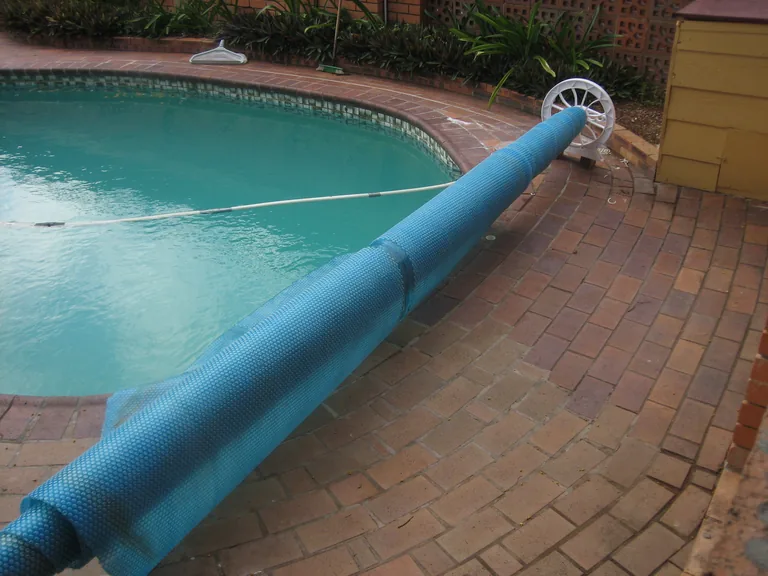
Pool cover: SMC / Wikimedia Commons, public domain. Other pool images are AI-generated illustrations created for Field52, not equipment specifications or installation instructions.