
Cooling
Cooling help starts with the symptom.
Check ice, indoor water, weak airflow, and a stopped fan. Use normal controls and the equipment model to choose the next step.
Choose the task in front of you.
Start with what you can observe, then collect the measurements or model details that matter.

Find the next step
Keep connected tasks together.
Use the related guide when a symptom points to a different part of the system.
Frozen AC and evaporator ice
Know when to stop and what to record.
Read guideCondensate and indoor leaks
Separate water drainage from refrigerant faults.
Read guideFan and compressor symptoms
Compare what runs and what does not.
Read guideAir-filter dimensions
Match nominal and actual size.
Read guidePlanned system care
Keep routine service separate from a fault.
Read guideHumidity and indoor air
Choose ventilation, filtration, or moisture removal.
Read guideBrowse cooling guides
Cooling essentials & common questions
AC not cooling: record the operating state.
Check the thermostat’s cooling mode, setpoint, active schedule, and any fault message. Note whether the indoor blower moves air and whether the outdoor unit is active. Fan-only operation can move room air without a cooling demand, and a normal restart delay can follow a power interruption.
If there is visible ice, an indoor water leak, abnormal humming, a burning smell, or repeated protective shutdown, stop cooling and use the relevant guide. Repeated resets do not diagnose a fault and can make the history harder to interpret.
Keep the accessible air path clear.
Use the filter access and maintenance procedure for the exact equipment. Confirm the correct filter, orientation, condition, and cabinet fit. Restore intended supply and return openings rather than operating with panels removed or many registers closed.
A dirty filter can contribute to poor airflow, but changing it does not prove the blower and refrigerant system are healthy. If cooling remains weak or ice returns, preserve the observations and arrange diagnosis.
Prepare a useful service record.
Indoor and outdoor model numbers, thermostat model, mode, and complete error code.
When the symptom began, outage or service history, and whether it appears continuously or intermittently.
Which fan runs, airflow, visible ice, first wet area, and unusual sounds from a safe distance.
Ask for the cause, documented compatible repair, work included, and verification after repair.
Keep owner checks separate from electrical and refrigerant work.
Normal controls, an accessible filter, and unobstructed grilles can supply useful evidence. Opening electrical enclosures, handling capacitors, bypassing switches, and charging refrigerant require different skills and procedures. A replacement part should follow a diagnosis, not just a matching symptom.
Keep clear of wet electrical equipment and unsafe attic or roof access. Do not repeatedly reset a tripping breaker, push a fan through its guard, or bypass a condensate overflow control to restart the system.
Compare repair scope before choosing equipment.
Ask whether the quote addresses an identified component, a whole indoor or outdoor unit, or a complete system. Compare the same scope, including diagnosis, labor, refrigerant work where relevant, required electrical or duct changes, controls, and warranty. A low online part price is not an installed repair quote.
For an older system, record the condition of the remaining components and any repeated faults. A single symptom cannot establish the economics of replacement. A technician should explain both what failed and why the proposed repair restores normal operation. Keep that explanation with the equipment models and service record.
If a replacement is proposed, sizing should account for the building and system rather than copying a nameplate or choosing a larger capacity to compensate for a fault. Installation access, air distribution, drainage, and control compatibility belong in the decision alongside the equipment itself.
Common questions
Does warm air mean I need a new compressor?
No. Control settings, airflow, a protective shutdown, and refrigerant or electrical faults can overlap. Record the system state and obtain the appropriate tests.
Are these guides for car AC?
No. They concern residential cooling equipment. Automotive systems and repair procedures are different.
Can I use the same guide for a mini-split?
The symptom can be comparable, but access, cleaning, drainage, and controls remain model-specific. Follow the ductless unit’s owner instructions.
Sources and product instructions
Use the instructions for the exact equipment and the requirements for your location. These guides help organize observations and choices; installation and professional diagnostic procedures remain product-specific.
Image credits
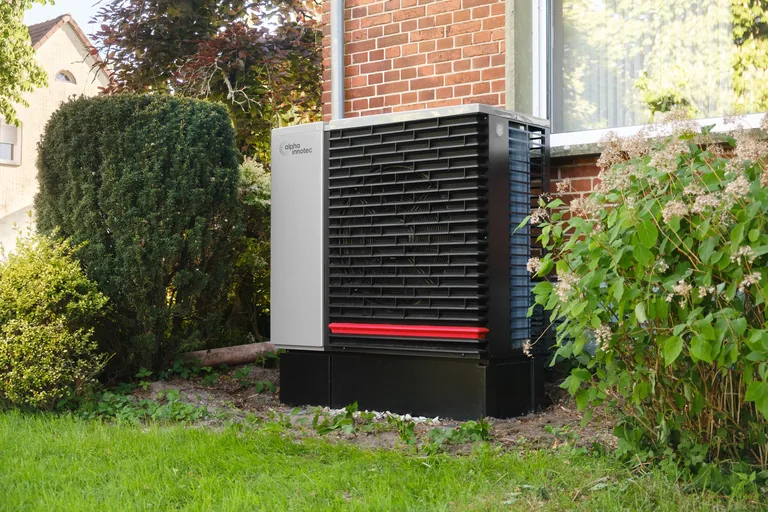
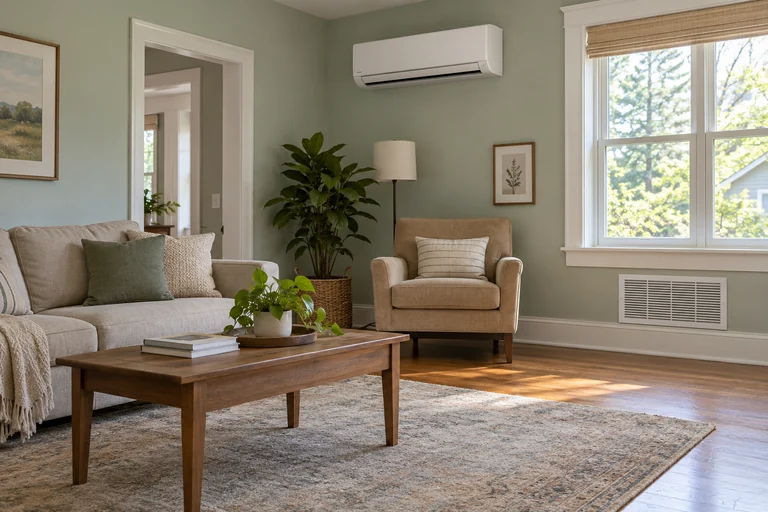
Room and household task scenes are existing AI-generated Field52 illustrations. The outdoor heat-pump photograph, where shown, is by alpha innotec via Pexels. Images illustrate a household setting and do not establish product compatibility or an installation method.