
Charcoal Grill Temperature Control: Vents and Heat Zones
Learn what opening the vents changes, why the lid matters and how to set up direct and indirect cooking.
On this page
Adjust fuel and airflow deliberately.
Charcoal temperature depends on the amount of lit fuel, airflow and how the lid and coals are arranged. Opening the dampers generally supplies more oxygen; reducing airflow can lower the fire. Make one controlled adjustment and wait for the grill to respond rather than chasing every change in the lid thermometer.
Use air and placement—not only extra fuel
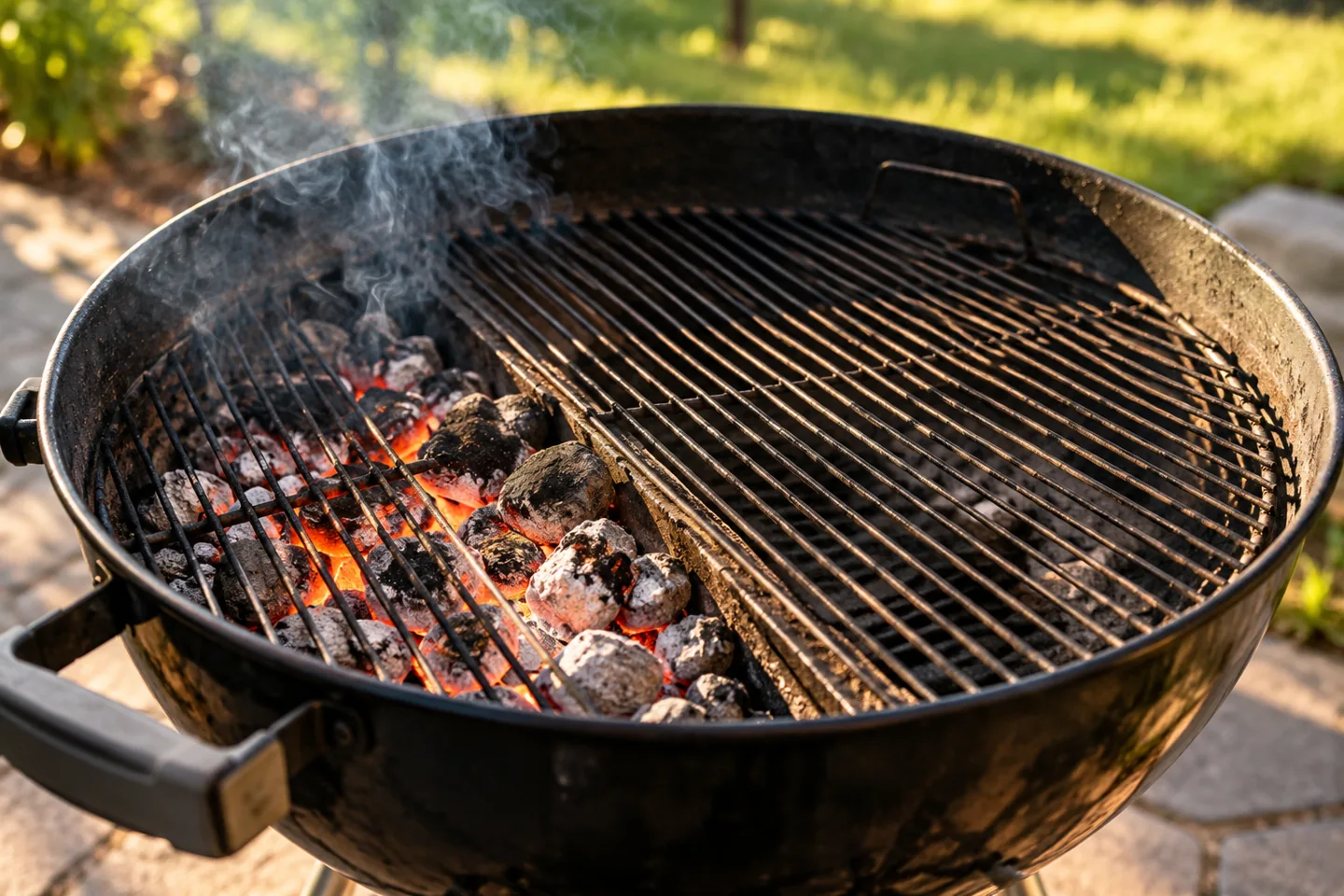

Use the distinctions below to choose a next step. Exact fit, operating limits, and control procedures must come from the instructions for your own model.
What changes the answer?
Feeds the charcoal fire with incoming air; ash buildup may obstruct airflow.
Helps set the path for exiting air, heat and smoke; position and opening depend on the design.
Place food over the coals for faster cooking; monitor flare-ups and food endpoint.
Place food away from the main coal bed for more gradual heating in a covered grill.
More lit fuel can create more heat; damp fuel and blocked air paths can undermine temperature control.
A practical sequence
- Establish the cooking method
Decide whether you need direct searing or a slower indirect cook before arranging the charcoal.
- Start charcoal by an approved method
Use a proper chimney or the maker’s specified starter. Never use gasoline, paint thinner or reapply lighter fluid to a live fire.
- Set airflow gradually
Begin with the manual’s damper setting; change one variable at a time and let the temperature stabilize before changing again.
- Use independent measurements
A lid dial is an air reading at one position. For meat doneness, use a food probe; for smoker environment, use an appropriate cooker thermometer.
- Finish and dispose of ash safely
Close down according to the manual and wait until ash and coals are completely cold before disposal.
Safety, limitations and stop points
Charcoal and spent embers can produce carbon monoxide. Never operate or move a hot charcoal grill into a garage, tent or enclosed room. Keep combustible material away from both the chimney and cooker.
Based on public safety guidance and manufacturer documentation. Model-specific instructions take priority; this is a research guide, not a hands-on product test.
Change heat through zones and airflow deliberately
| What you have | Check or choice | What changes |
|---|---|---|
| Opening intake vents | Usually increases oxygen supply | Response takes time; changes are not instant or linear. |
| Adjusting exhaust | Affects flow and smoke path | Keep airflow consistent with your cooker’s instructions. |
| Direct zone | Over or near the coals | Useful for active high-heat cooking when the appliance supports it. |
| Indirect zone | Away from direct coals | Monitor cooker air temperature and food doneness, especially for long cooks. |
Worked decision
If food browns too quickly on one side, moving it to the indirect zone may be more useful than immediately closing every vent. Make gradual changes and monitor with suitable thermometers.
Never operate charcoal or wood-burning grills indoors or in enclosed spaces due to carbon monoxide. Dispose of ashes only after complete cooling.
Think in heat zones and give vent changes time
The effect of a vent adjustment depends on the airflow path, lit charcoal amount, lid position and weather. Give a small adjustment time to settle rather than making multiple large changes in quick succession. A two-zone arrangement can move food away from direct heat while the cooker continues operating as designed.
Separate cooker-air monitoring from food temperature. Charcoal combustion produces carbon monoxide, so the grill must never be used in enclosed spaces.
Common questions
Does opening charcoal grill vents make it hotter?
Generally, increasing airflow supports hotter combustion, up to limits set by fuel and grill design.
Why does my charcoal grill run cold?
Fuel amount, damp charcoal, obstructed vents, outdoor conditions and direct-versus-indirect setup can all matter.
Should I close both vents to keep a low temperature?
Follow the maker’s method; closing vents too far can starve the fire. Do not blindly copy another grill’s damper percentages.
How is this different from smoker temperature?
This guide concerns managing a charcoal fire. The smoker temperature chart separates cooker air from safe food-internal endpoints.