
Gas vs. Charcoal Grills: Choose for the Way You Cook
Compare startup, heat control, smoke character, cleaning and recurring work before choosing a grill—not just fuel price.
On this page
Choose based on how you actually cook.
Gas and charcoal both produce good grilled food. Gas usually makes weeknight startup and repeated temperature adjustments easier; charcoal rewards someone who wants to manage the fire and smoke. The deciding factors are where you can cook, how frequently you use it, and the amount of setup and cleanup you will actually tolerate.
Compare the weekly work, not just the fuel

Use the distinctions below to choose a next step. Exact fit, operating limits, and control procedures must come from the instructions for your own model.
What changes the answer?
Gas: turn on and preheat per manual. Charcoal: light fuel and wait for a usable bed of coals.
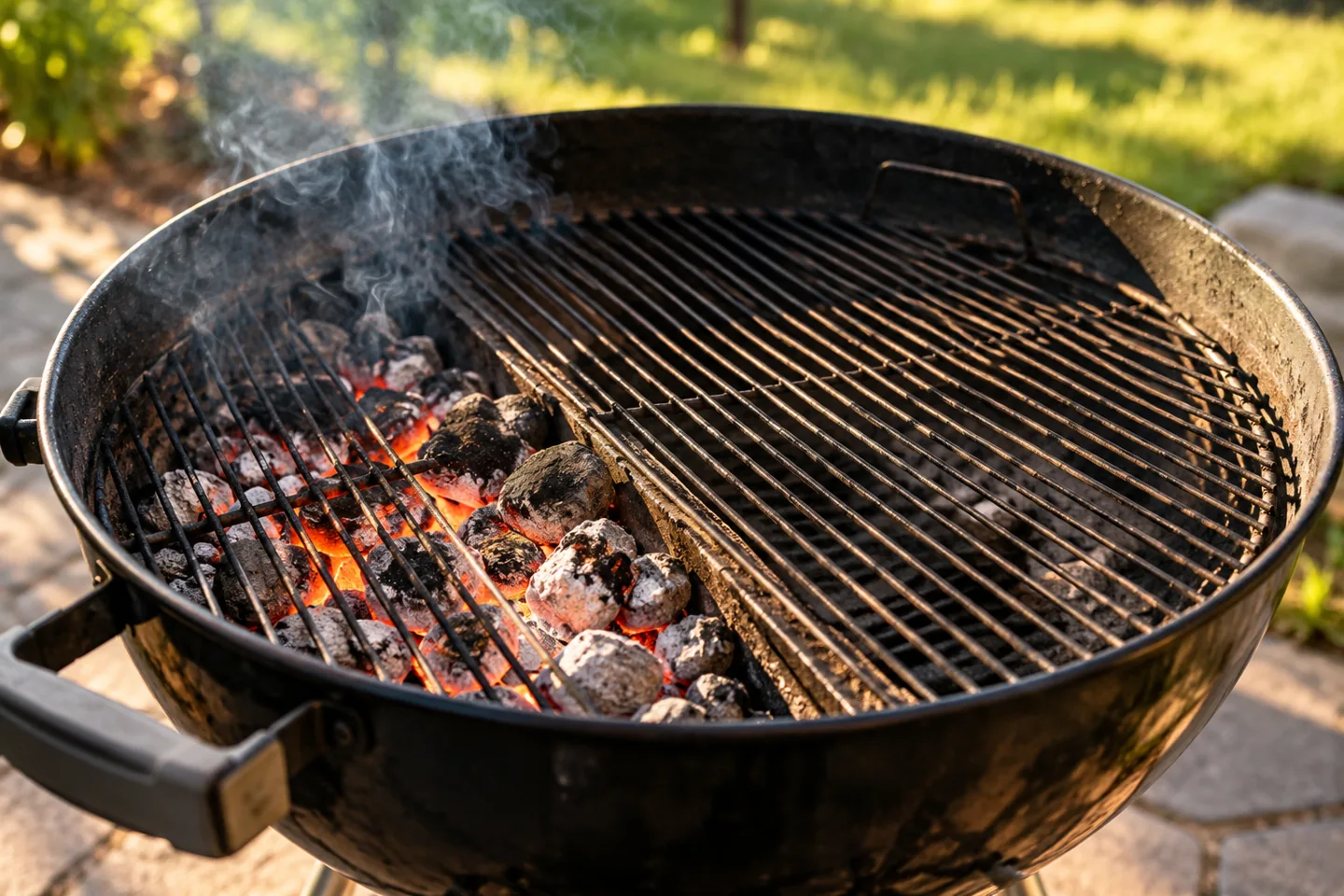
Gas: vary burners to create zones. Charcoal: place coals on one side for direct and indirect heat.
Charcoal adds combustion character; the result also depends on food, lid management, smoke and technique.
Gas: maintain a compatible propane cylinder or qualified fixed connection. Charcoal: store dry fuel and dispose of completely cold ash.
Both need grate and grease care; charcoal also produces ash that must cool fully before disposal.
A practical sequence
- Start with the site
Check whether charcoal or gas appliances are permitted at your home, on a balcony or in a shared building. Local and property rules can be stricter than general outdoor-grilling advice.
- Be honest about cooking frequency
If you cook a quick dinner several nights each week, the lower-friction startup matters. If you primarily host long weekend cooks, fire management may be part of the appeal.
- Plan direct and indirect zones
For a gas grill, check independent burner zones and cooking layout. For charcoal, check whether the grate and kettle size allow coal placement away from food.
- Price the whole routine
Include a suitable grill, usable cooking area, fuel, covers, a probe thermometer, cleaning tools, and safe storage; do not compare sticker prices alone.
Safety, limitations and stop points
Never use either fuel grill indoors, inside a garage, tent or enclosed porch. Keep the appliance in its manual-approved outdoor location; charcoal can continue to release carbon monoxide long after visible flames fade.
Based on public safety guidance and manufacturer documentation. Model-specific instructions take priority; this is a research guide, not a hands-on product test.
Which fuel fits the way you actually grill?
| What you have | Check or choice | What changes |
|---|---|---|
| Quick weekday meal | Gas | Faster routine startup and adjustable burners; still needs cleaning and gas checks. |
| Occasional long outdoor cook | Charcoal | Fuel, lighting and airflow need more attention; smoke flavor depends on technique. |
| Indirect cooking | Either | Check if the cooker supports separated heat zones and a suitable lid. |
| Ongoing cost | Neither by default | Compare local fuel price, fuel used per cook, parts and maintenance, not just entry price. |
Worked decision
A household that grills dinner twice a week may care most about setup time and repeatability. Another owner who enjoys building a coal bed may prefer charcoal even with a longer routine. Neither preference proves one fuel produces better food in every situation.
Before purchase, list usable cooking area, storage footprint, safe placement, cleaning work and local fuel supply. A brand/model comparison comes later, after verified offers.
Do not confuse dual-fuel grills with a fuel comparison
A listing for a “gas and charcoal grill” may describe one appliance containing both cooking systems. That is a different shopping task from deciding whether a gas or charcoal grill is better for you. Compare the footprint, combined cleaning work, separate fuel storage and maintenance requirements of a dual-fuel unit before assuming it offers every advantage of both systems.
Cooking area alone is also a weak shortcut: usable heat zones, lid height and access to indirect cooking can matter more for the meals you actually cook.
Common questions
Which is easier for beginners?
Gas usually requires less active fire management once the approved lighting procedure is learned. A charcoal kettle can still be beginner-friendly for someone willing to learn vents and coal placement.
Does charcoal always taste better?
No. Fuel creates opportunities for different smoke characteristics, but results depend on ingredients, cooking temperature and technique. Treat flavor claims as preferences, not measured universal scores.
Can one grill do both?
Some marketed combination products have dedicated gas and charcoal sections. Searching for “gas and charcoal grill” often signals that product category, which is different from comparing two separate fuels.
Do I need a built-in thermometer?
A reliable food thermometer is important for doneness. A lid dial alone does not accurately report food internal temperature.