
Gas grills
Convenient repeat cooking with adjustable burners. Think about fuel supply, the usable cooking footprint, grease management and replacement parts.
Lighting and safety →Field 52 · Outdoor cooking & BBQ
Practical buying decisions, cleaning, parts and cooking guides for gas, charcoal and pellet grills. Start with the job you actually need to do.

Start here
Skip broad lists. Go directly to a fuel choice, a symptom, a part or a safe cooking measurement.
Most useful first reads
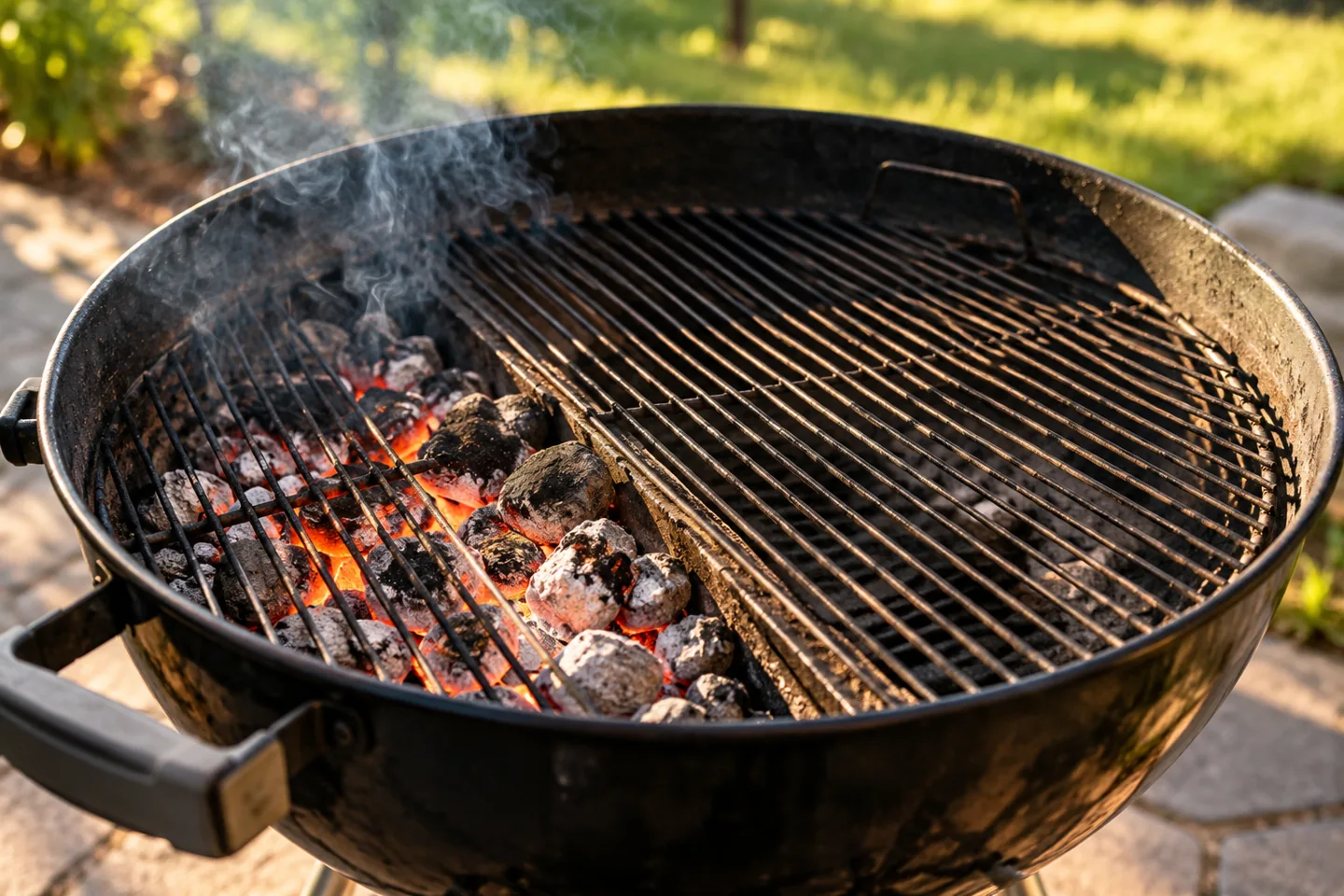
Compare setup time, heat management, maintenance and the cooking routine—not unverified winner rankings.
Compare fuel types →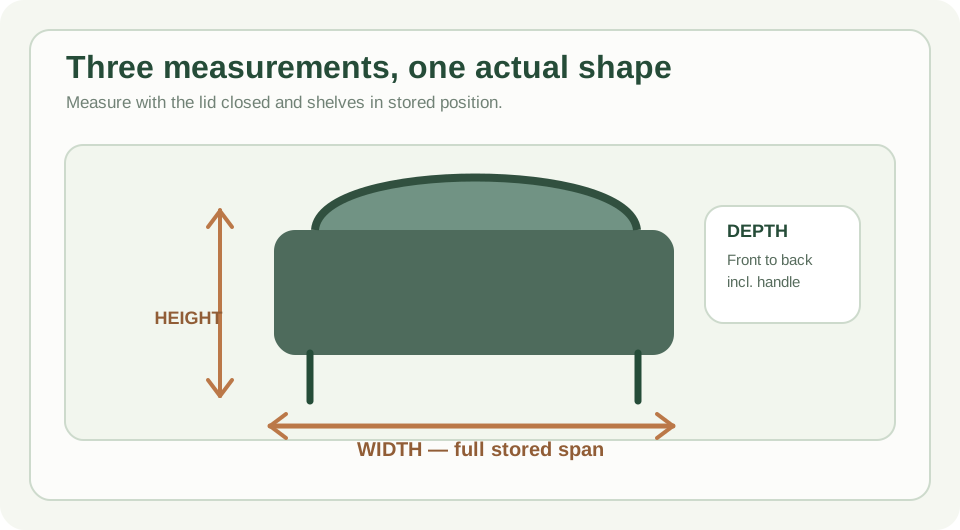
Width, depth, height, handles and shelf position: record the dimensions that actually affect fit.
See the measurement guide →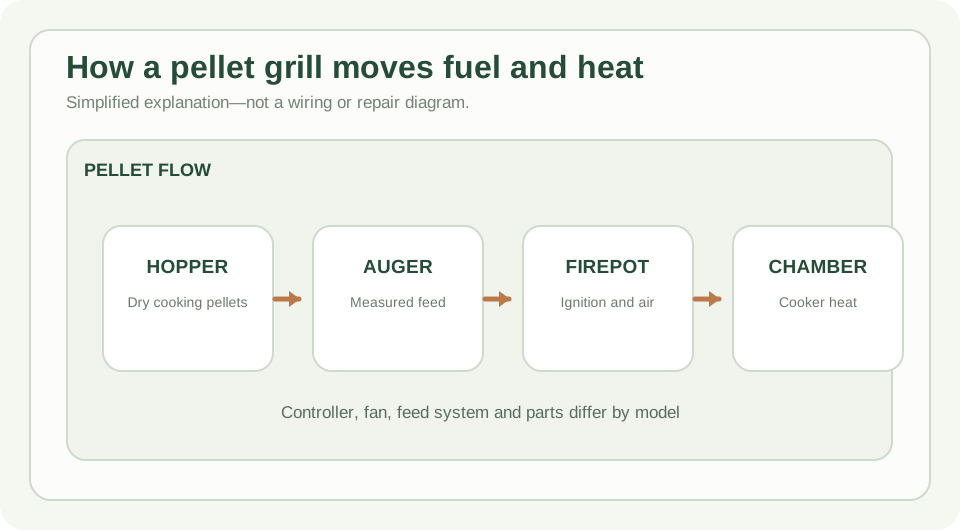
Understand fuel feed, ignition, cleaning, power needs and what to check before choosing a pellet cooker.
Understand pellet grills →Before you buy
A good purchase starts with how often you cook, how much tending you enjoy and whether the location meets the manufacturer’s safety requirements.
Convenient repeat cooking with adjustable burners. Think about fuel supply, the usable cooking footprint, grease management and replacement parts.
Lighting and safety →Hands-on coal and airflow management, with direct and indirect heat zones. Check the space, ash handling, vent layout and safe storage.
Heat control →Wood pellets moved by powered feed and ignition systems. Check the required outlet, controller design, pellet storage and cleaning access.
How pellet grills work →Useful reference
A smoker reading tells you the cooking environment. A food probe tells you if the food reached its safe minimum internal temperature.
See the temperature guide →USDA minimums. Check the food-specific instructions; 225–300°F refers to typical smoker air, not a meat endpoint.
Field 52 library
17 practical guides organized by the decision or job, with related keywords combined into one useful page.
Pick fuel, plan a usable cooking space, or measure a cover.
Find the next safe step, then match the exact part.
Care for cooking grates and verify cooking temperatures.
From first startup through upkeep and fuel condition.
Understand the difference between direct and indirect heat.
These are practical research-based guides, not claims of hands-on product testing. When selecting parts or operating fuel equipment, check the documentation for your exact model. How Field 52 evaluates evidence →